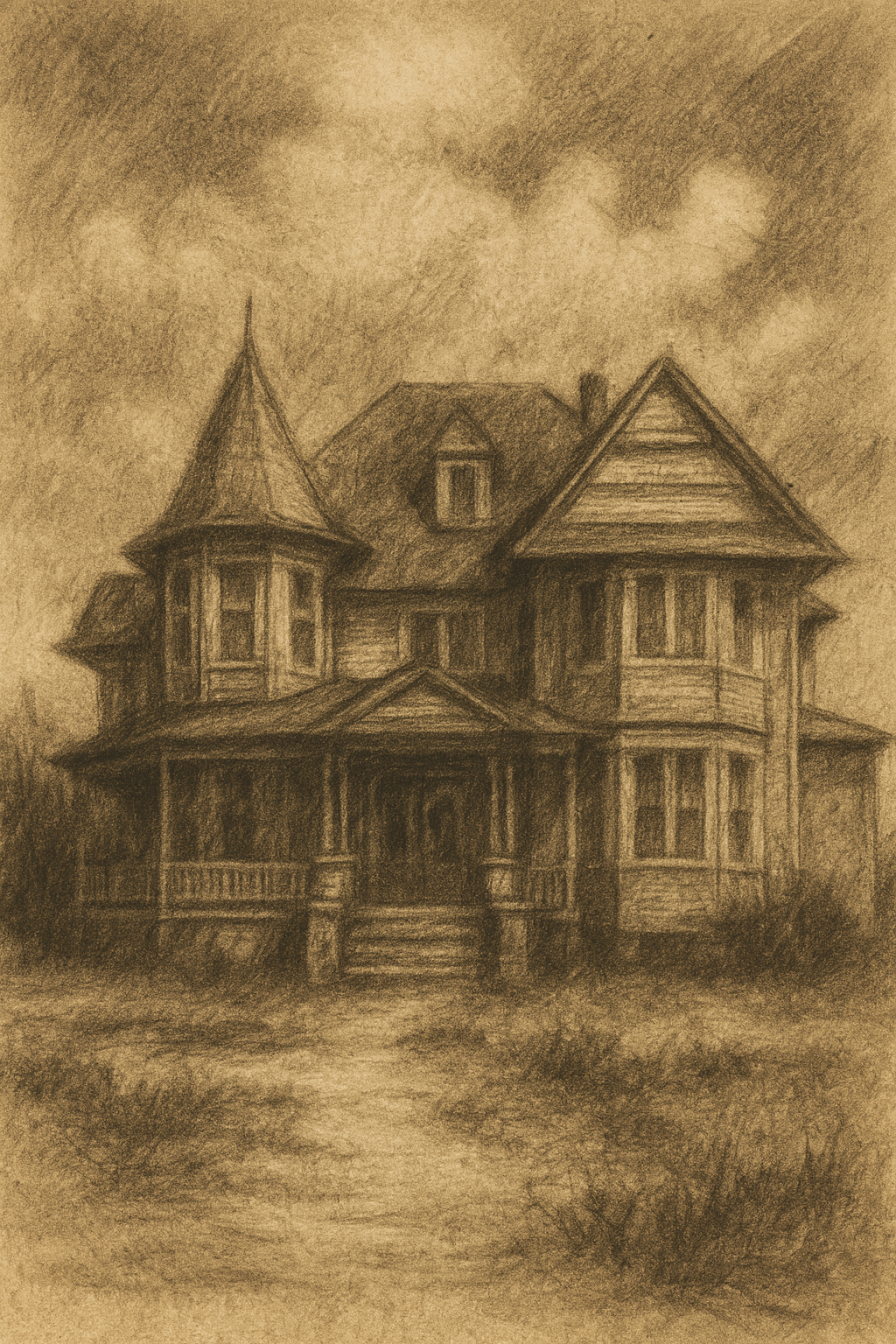
From sharecropper rows to coal trains and the railroad’s iron promise, Estill County is the beginning of my maternal line.
My grandfather, Jessie, built this house by hand
for his wife, Nannie Belle.
After Little Mammaw left,
the Big Ol’ House became refuge for Della
and her two girls—until the day Walter Earl arrived
to claim her.
Big Ol’ House
Pappaw sharecropped Eastern Kentucky’s hardscrabble ground, renting mules, plows, and a one-room cabin just to survive. Little Mammaw, knotty as a pine tree and beautiful in a weathered, quiet way, raised seven children there, scraping by on their sharecropper’s cut and prayers.
By the 1920s, the mines had hollowed out the mountains, and the L&N railroad tore through Estill County’s valleys. Pappaw traded a sharecropper’s plow for a railroader’s job, earning six dollars a day. Big-city mortgages hadn’t snaked into the hollers yet. But railroad money let Pappaw build Little Mammaw a house that stood out from the shacks that lined the hollers of Estill County.
I grew up on their stories, woven into the houses they built—houses heavy with whispers of love, devotion, betrayal—like the night my mother, Della’s screams shook the walls of the Big Ol’ House.
They moved from that sharecropper’s cabin to a Victorian beauty complete with deep steps that led to a wraparound front porch and a turret on each side. From the outside, it looked like a fairy castle; from the inside, a cathedral where dust danced on sunbeams in front of the fireplace mantel. Time wore down the Big Ol’ House and the people who lived in it. Its paint faded, and its frame sagged under years of burden and neglect.
Over the years, their bodies broke down much the same.
The family joked that once Pappaw figured out how Little Mammaw ended up pregnant 18 times, he built himself a solitary place in the side yard.
It was a small wood-frame house painted a crisp shade of white with a sitting room, washroom, and bedroom—for one. Day after day, her worn-out legs ached under the thick support hose rolled up to her knees. Still, before she rang the family dinner bell, she toted his biscuits across the yard. Her small frame cast a long shadow as she crossed the side yard to Pappaw’s silent White House.
That’s right, their houses had nicknames. Little Mammaw lived in the Big Ol’ House with all the kids and some of her grandkids, too.
Pappaw spent his time away from the railroad, the kids, and Little Mammaw, squirreled away in his White House. His rock-hard gaze from the White House front porch let you know, even at a distance, that company and trouble weren’t welcome there.
From Sand Hill you couldn’t see the bits of coal that dotted the route along Highway 52, but you could smell the coal’s tarry sulfur. Coal dust clung to the air and coated everything with dark memories.
Pappaw would come home from riding the coal trains as black as midnight, no different from Little Mammaw’s Daddy who worked the coal below ground. They’d both thought that railroad work was the holy grail—a job in the sunshine, safe from the coughing death that came from working in the shafts. But shoveling coal in the engine car and riding atop the coal cars day after day covered Pappaw with the same dust that had killed her Daddy. Her eyes would get wet while watching him strip in the side yard, keeping the slack outside his pristine White House.
Mountain life was hard on women and babies.
Little Mammaw buried five of her 18 children before they were old enough to be baptized. Their tiny graves dotted the family cemetery just down the road like tufts of bright spring grass.
When Pappaw died in 1955, Little Mammaw buried him in the same ground. She tried to hold on to the homes he’d built by hand as long as she could, but eventually she sold both to the railroad.
Before L&N took possession, she moved to Kenton County with most of her surviving 13 children. With Pappaw gone, she left Estill County to escape its pain. Her children, now grown, followed her and the L&N north to the Latonia railyard.
By the time I was born, the railroad still hadn’t torn down the houses. Family stragglers lingered there at the Big Ol’ House.
When the bar fights, court cases, and other women finally split Della and Walter Earl apart up north, she did what she always did—ran back home.
Mother, Nancy, and I stayed in the Big Ol’ House, waiting out the storm in its empty rooms, praying time would stop and the demolition date wouldn’t come.
***
My first memory is of sitting on the floor inside the Big Ol’ House staring up through the windows that stretched toward the clouds.
When I shared this recollection with older folks, they said it must’ve been a nightmare, that I was too young to remember, but the memory remains: Glitter swirled around a photograph of my mother, Della—Little Mammaw’s beautiful daughter—her mouth soft and smiling. A red birthmark on my chin ached from the weight of mountain superstition and a mother’s cruel vanity.
And the rusty smell of blood—sharp as broken glass—etched a scar into the Big Ol’ House. This story, Actin’ Ugly, is part of The House of Fugate saga.